Triggers
Tickets, CI and alerts each become a card when you click them. A trigger does that click for you:
a rule in the organization’s desk.toml that desk follows on its own.
[[trigger]]name = "new tickets"on = "ticket"project = "ABC"start = true
[[trigger]]name = "fix red CI"on = "ci_failed"
[[trigger]]name = "database down"on = "alert"match = "db"after = 10
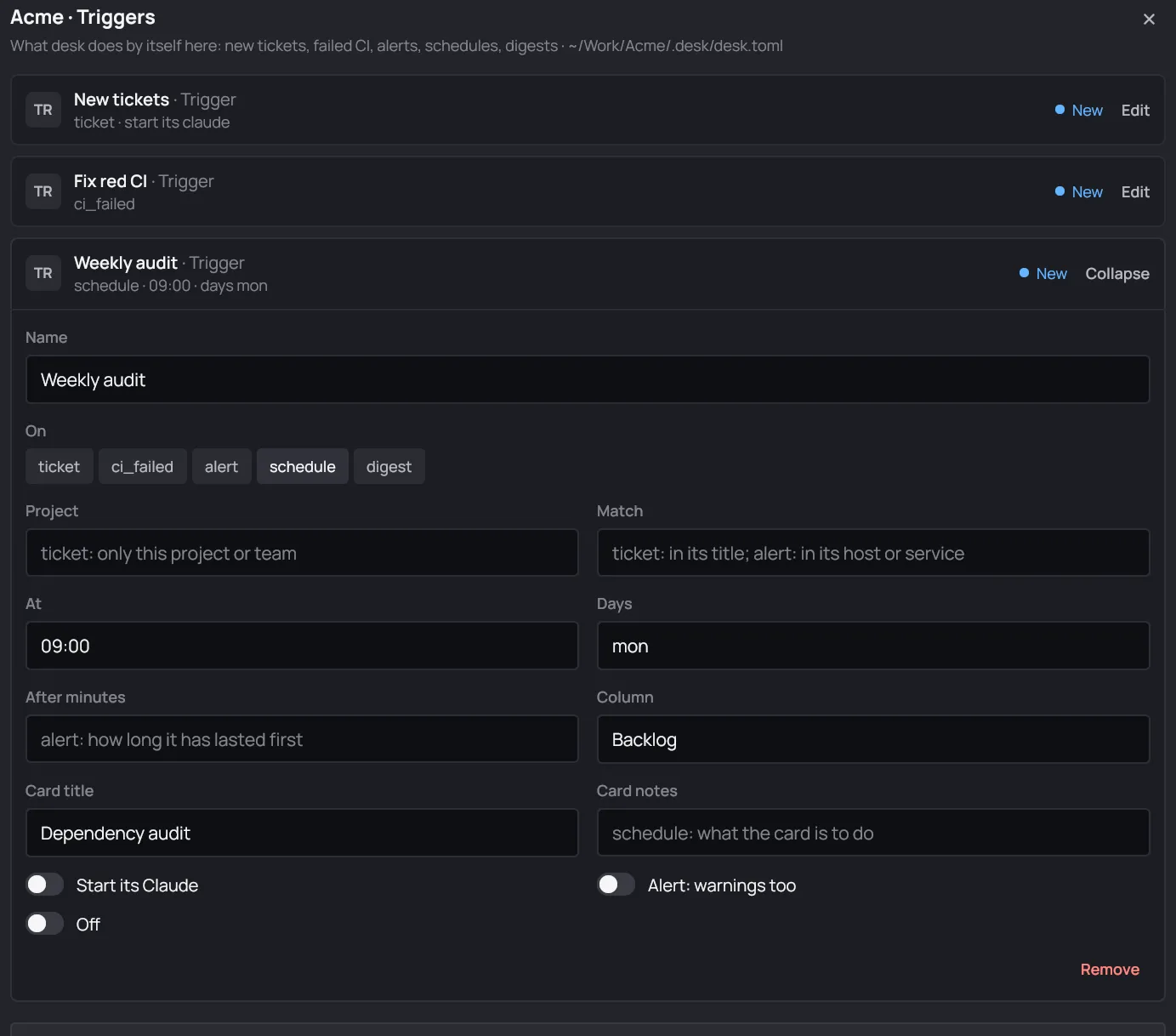
[[trigger]]name = "weekly audit"on = "schedule"at = "09:00"days = ["mon"]title = "Dependency audit"notes = "Check every repository's dependencies for known vulnerabilities and outdated majors."
In Settings, the organization’s Triggers page edits them: a card per trigger, + Trigger to add one. Save refuses a trigger without a name, and an After minutes that isn’t a whole number.
What each watches
Section titled “What each watches”on |
When | What it does |
|---|---|---|
ticket |
a ticket assigned to you shows up in the organization’s Tickets with no card yet (of project, with match in its title, when given) |
a card for it in To do, titled with its key and title, the ticket linked; start starts its Claude |
ci_failed |
a pull request or commit linked on a card that isn’t in Done fails a CI run (what the CI view shows) | tells the card’s Claude which runs failed (a round’s failures of one link in one message), to read them with ci and ci_log and fix it; at most 3 times a day per card, so a fix that fails again doesn’t loop, and like another Claude’s message it doesn’t count as your go-ahead past a budget |
alert |
a monitoring alert nobody acknowledged or snoozed: an error (and warnings with warnings), that has lasted after minutes, its host or service matching match |
an investigation card in progress, as Investigate makes, its Claude started on it |
schedule |
the time at (local), on days (every day without them) |
a card with title and notes; start starts its Claude |
digest |
the time at, on days, as schedule |
sends the organization’s digest since yesterday to your phone; without a paired phone, a toast says so |
Every card a trigger makes says so at the end of its notes: “(Made by the trigger weekly audit.)”.
A toast says which trigger made which card. column puts its cards in another column.
When they run
Section titled “When they run”Triggers run after each check desk makes of links, tickets, CI and alerts: when desk starts, and every 3 minutes after. A schedule therefore runs within 3 minutes of its time, once that day.
What each trigger has handled (tickets, CI runs, alerts by when they started, a schedule’s last
day) is kept in the organization’s .desk/triggers.json, so nothing is done twice, not even across
restarts. A trigger’s first run only notes what is already there: turning one on doesn’t make a
card for every ticket you already have, and a schedule added after its time runs from the next
day. off = true pauses a trigger and keeps what it handled.
An on desk doesn’t know says so in a toast.